
Narratives of Regeneration: Storytelling Futures for Environmental Justice
Case Study by Alicia Richins of The Climateverse
Image Credit: Alicia Richins
The Project
As part of RENEW Biodiversity Parliament 2025, Alicia Richins of The Climateverse hosted a workshop exploring how storytelling and futures thinking can help us imagine—and move toward—more just and biodiverse futures.
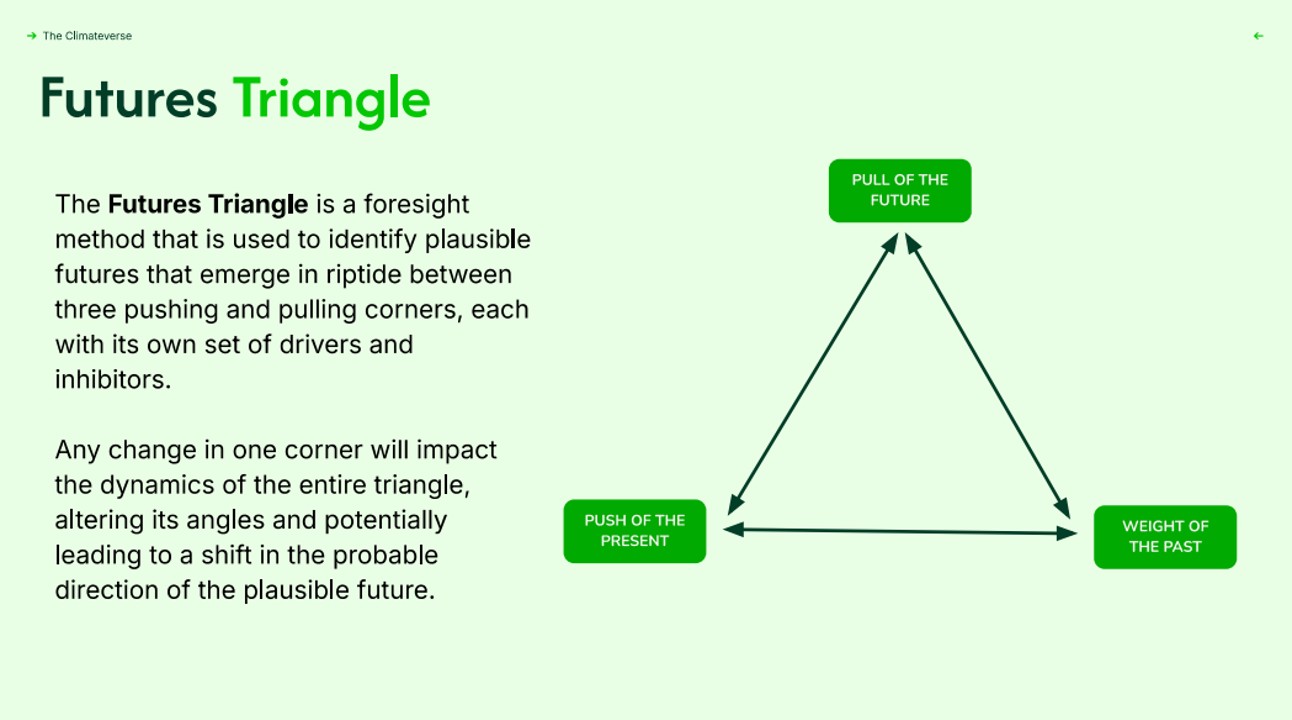
Titled Narratives of Regeneration, the session brought participants together to engage with the Futures Triangle, a foresight method that maps the pull of preferred futures, the push of present trends, and the weight of historical and structural barriers. Participants then translated these insights into collaborative storyboards, imagining how different futures for biodiversity and environmental justice might unfold.
Mapping Environmental Justice
Environmental justice emerged as both an explicit and underlying theme throughout the session. Participants identified entrenched governance systems, political norms, and persistent inequalities that continue to shape who has access to nature, whose voices are heard in decision-making, and how environmental benefits and harms are distributed.
These issues were most visible in the “weight of the past,” where participants named structural barriers such as the concentration of wealth and land ownership, extractive economic systems, and entrenched colonial worldviews. These related to issues identified in the “push of the present,” like growing inequality, increased isolation and polarisation, and pressures from markets, technology and AI. At the same time, attendees did note the growth of renewable energy and increased citizen awareness of the need for change. This led into promising shifts noted in the “pull of the future” like the potential for care-based economies, and ecological abundance amidst the difficulties wrought by a changing climate.
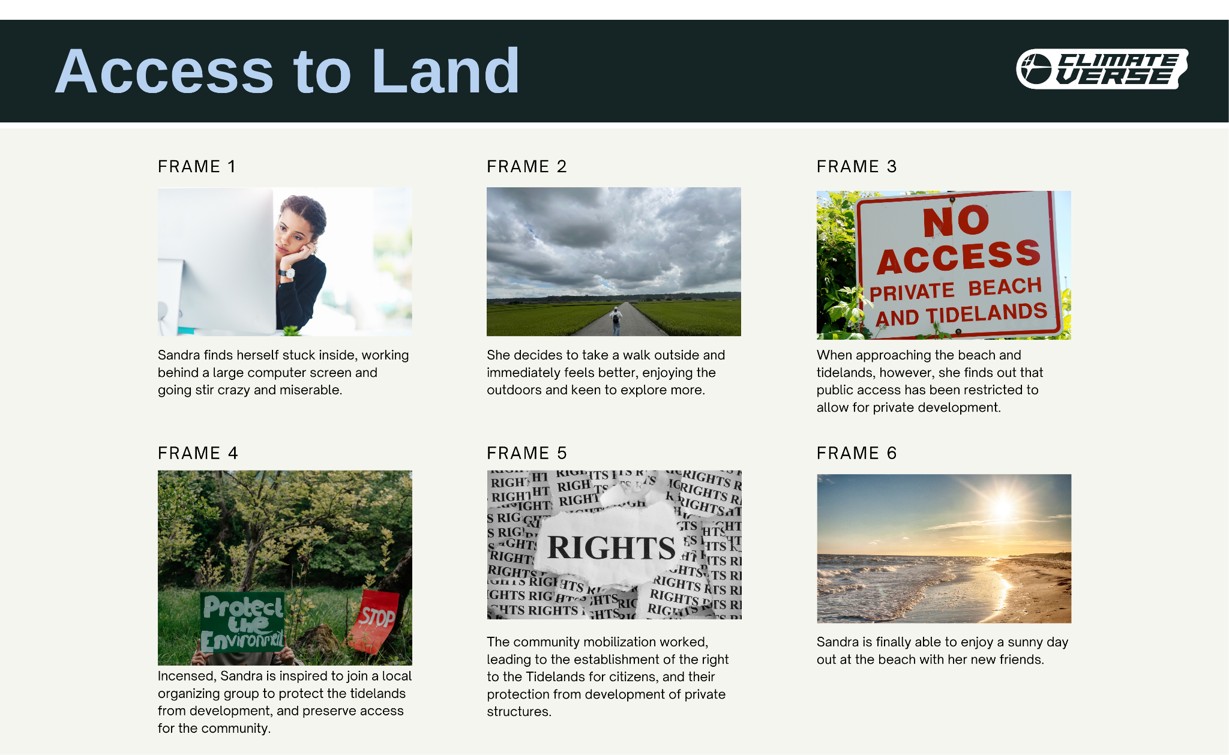
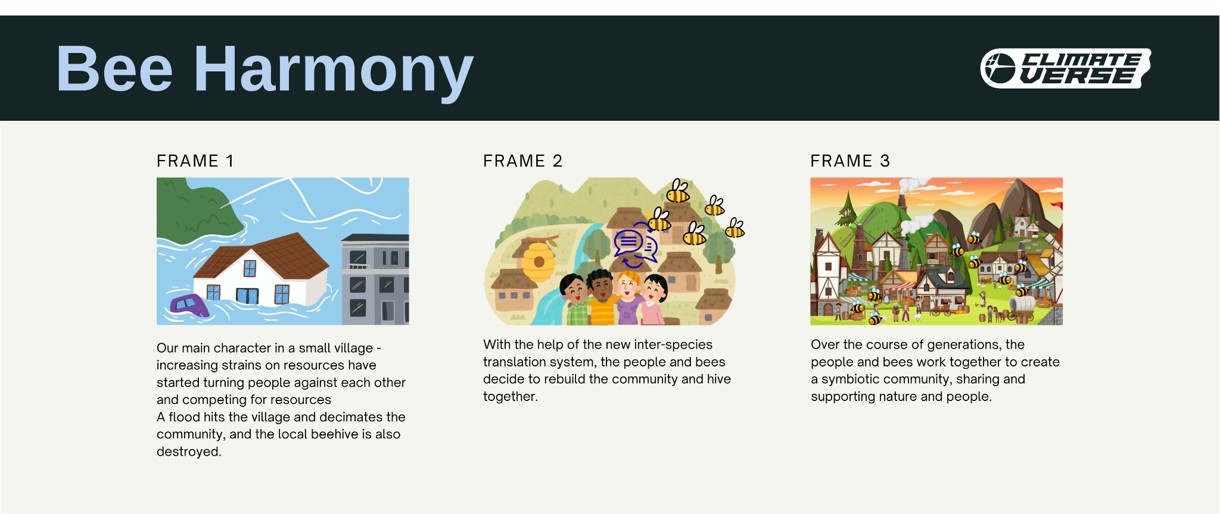
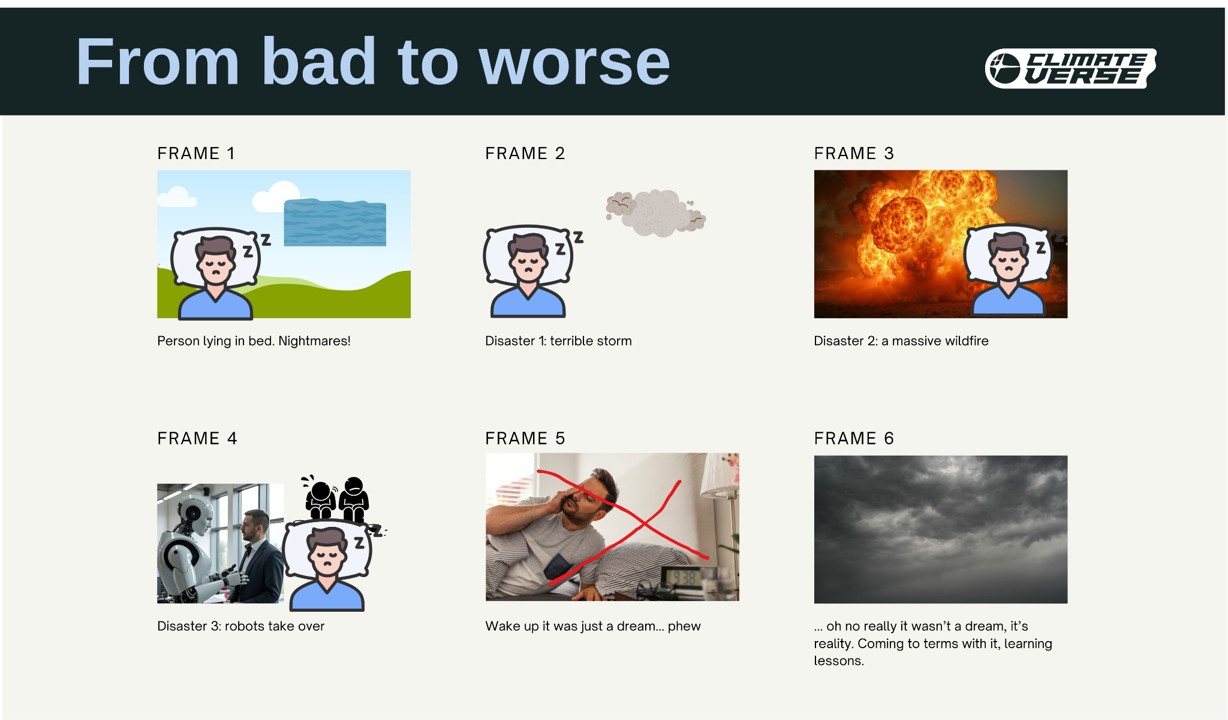
Participant-created storyboards explored diverse pathways toward biodiversity protection and environmental justice.
Reflections and Limitations
In navigating the obstacles and supporting factors on the way to the group’s preferred futures, participants were able to pinpoint shifts that can be made both in the collective image of our preferred future, and in the ways we navigate the weights, pushes and pulls on the way there. These included more open conversations, empathy, mutual aid and community engagement, as well as holding space for difference and disagreement, letting go of control over outcomes and letting go of dying systems
The workshop highlighted both the potential and the limits of short-form engagement with complex justice issues. While participants were able to surface key challenges and opportunities, there was limited time to fully develop their creative narratives to distil outside the room.
Pathways Forward
Overall, the session demonstrated the value of combining storytelling with foresight tools to make environmental justice more tangible and actionable. By moving beyond abstract discussion into shared narratives, participants were able to explore not just what is wrong, but what could be different—and what it might take to get there.
The session outputs offer a snapshot of this collective imagination, highlighting both the urgency of the challenges we face and the creativity available to address them. Together, they point toward the importance of participatory, imaginative approaches in shaping more just and biodiverse futures.
Project Team
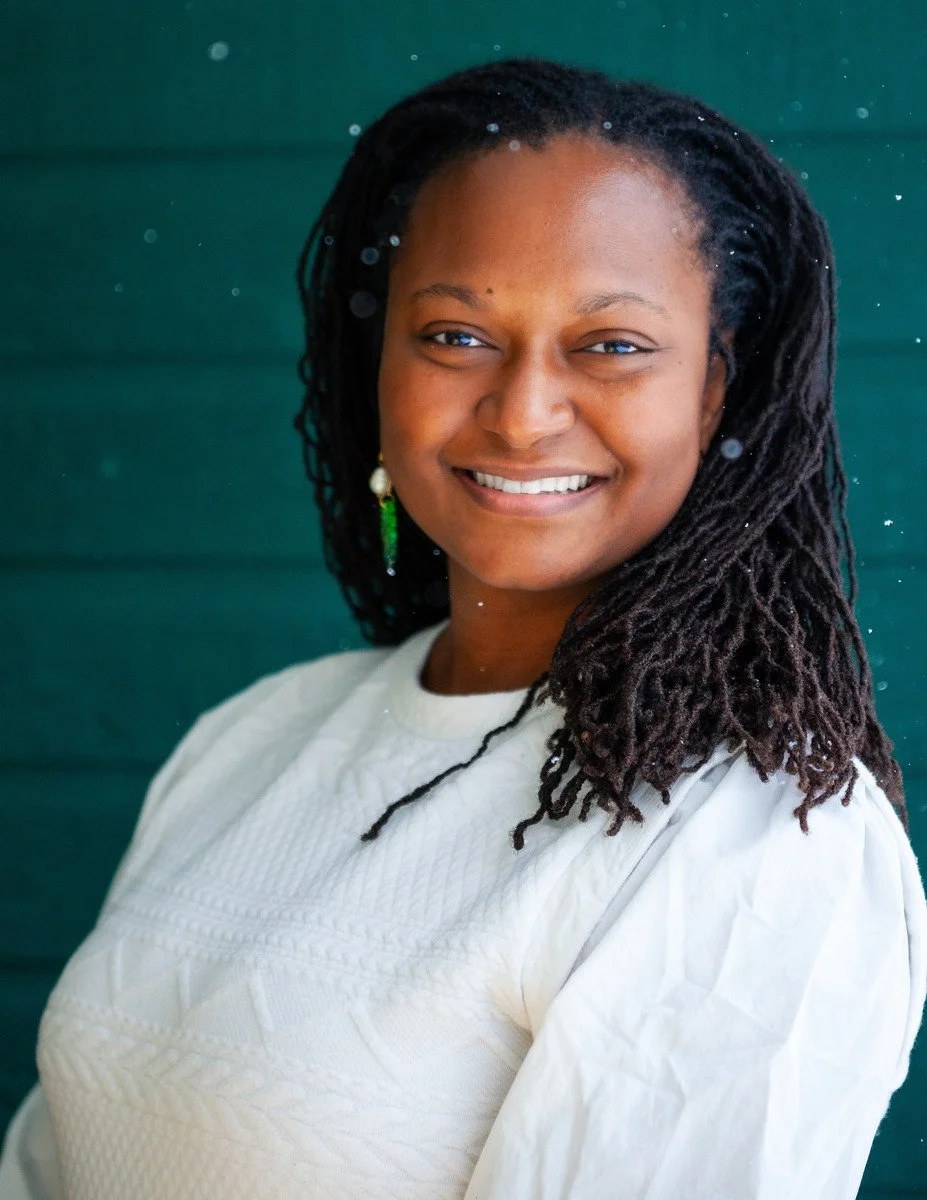
Alicia Richins (she/they) is a climate justice advocate, sustainable impact strategist, and writer passionate about imagining beyond the plausible.
With nearly a decade of facilitation experience and five years in consulting, Alicia helps organizations and community groups develop futures-oriented impact strategies that navigate the intersections of climate, social, and economic justice. Through their work, they guide teams in unpacking complex challenges while building actionable pathways toward their desired futures.
A proud Trinbagonian-Canadian, their approach is shaped by deep engagement in the youth climate movement across Canada and the Caribbean, alongside graduate studies in ecological economics, international development, and urban planning. Their work is further enriched by ongoing education in strategic foresight, sustainability, and systems change.
GET CONNECTED WITH ALICIA

The Climateverse is a narrative change lab dedicated to shaping climate just futures, creating immersive storytelling experiences that help individuals, communities, and organizations explore possibility, navigate uncertainty, and translate imagination into meaningful action.