
Philosophy in the Wild: Co-creating multispecies poetry
Case Study by Dr Elizabeth Mackintosh, University of Winchester
Photos Credit: Dr Elizabeth Mackintosh
The Project
This project sits at the intersection of animal ethics, environmental ethics, and broader questions of environmental justice within environmental philosophy. Drawing on Mary Midgley’s notion of the “mixed community,” it brings together philosophers, scientists, poets, and young people in an interdisciplinary effort to investigate and map human–animal relationships that move beyond exploitation and promote restoration, coexistence, and environmental justice.
At a time when humans and the domesticated animals under their control comprise roughly 96% of global mammalian biomass, while wild animal populations continue to decline, Midgley’s multi-criterial contextualism provides a valuable framework for addressing ethical challenges concerning both human–animal relations and environmental justice. It has become increasingly clear that historical models of human governance, domination, and exploitation of mixed communities are neither just nor sustainable.
The case of Pembrokeshire, Wales
The project explored multiple context-specific examples of environmental injustice across the globe. My team’s work focused on longstanding concerns in Pembrokeshire. For over a decade, residents and conservationists have argued that growing commercial adventure tourism in and around Ceibwr Bay has negatively impacted protected wildlife and sensitive habitats, constituting a form of environmental injustice towards non-human animals.
These concerns intensified following proposals to develop an outdoor adventure centre in nearby Moylgrove. After identifying potential shortcomings in the environmental assessment and consultation process, Wild Justice initiated a judicial review of the planning permission granted by the Pembrokeshire Coast National Park Authority.
Read More: Waking the Dragon -A community fighting to protect Ceibwr Bay – Wild Justice
The Justice Issue
Mary Midgley was a British moral philosopher whose work helps us make sense of the human animal and its (our) place in the world. ‘We are not just rather like animals’, she wrote, ‘we are animals’. Midgley made major contributions to environmental philosophy, animal ethics and philosophy of science.
Midgley argued that three groups are particularly inclined to attend to the unpopular and overlooked: poets, scientists, and children. Inspired by this insight, our project brought together poets, writers, scientists, and, most importantly, children to explore the challenges facing contemporary mixed communities through case studies such as Ceibwr Bay.
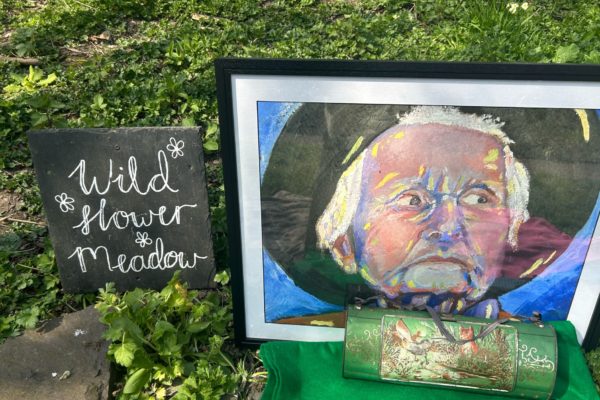
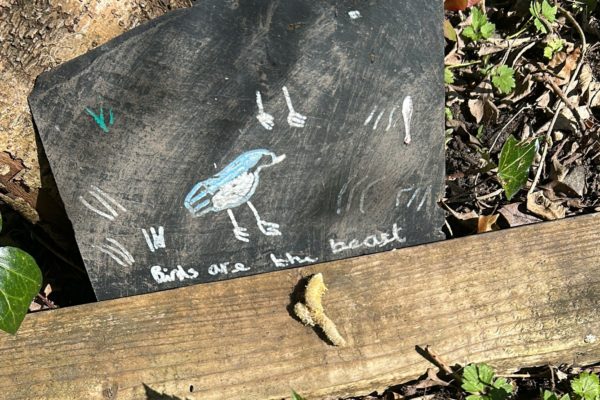
Using poetry, storytelling, visual art, philosophical inquiry, and facilitated dialogue, participants examined ethical tensions surrounding human activities and forms of environmental injustice, particularly where the interests of wildlife and ecosystems are subordinated to human recreational and economic priorities. By drawing on diverse forms of knowledge and imagination, the project sought to cultivate new ways of understanding and envisioning human–animal relations that are more reciprocal, restorative, and mutually beneficial, thereby contributing to Midgley’s vision of more just mixed communities.
The project was not originally designed around a specific environmental conflict; rather, it aimed to explore human–animal relationships, mixed communities, and ethical questions through creative and philosophical approaches. The connection with Ceibwr Bay emerged alongside our planned activities, rather than being something we had anticipated. One member of the team was already closely involved in the work surrounding the bay and became a key driver in bringing this live issue into conversation with the wider aims of the project.
This experience revealed how environmental justice issues can emerge through unexpected pathways, linking questions of animal ethics, conservation, community interests, and access to nature. The case of Ceibwr Bay also highlighted that environmental concerns do not exist in isolation: wider local challenges, including class-based inequalities, literacy access, and economic pressures within a tourism-dependent area, were also part of the context.
The Case Study Team
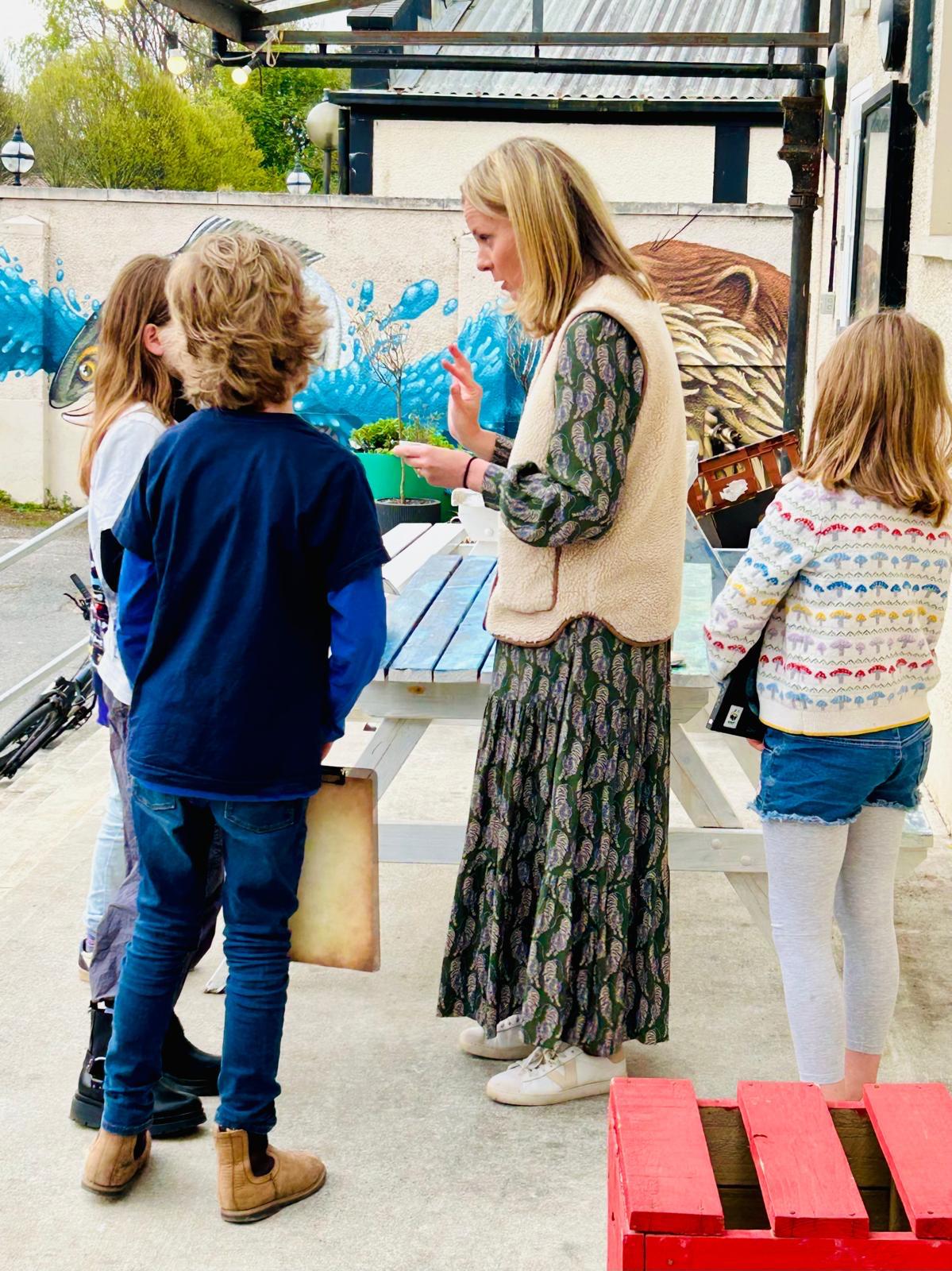
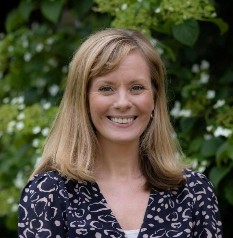 Dr Elizabeth (Beth) Mackintosh is a Philosopher and a Visiting Research Fellow and Lecturer at the University of Winchester. She works in moral philosophy, medical ethics, animal and environmental ethics and on the work and legacy of Mary Midgley. For “Philosophy in the Wild”, she has organised a 5-part series of workshops for young people with an inspiring host of collaborators, to explore the relations people in Wales have with a wide range of wild creatures – from marine animals to butterflies.
Read more about Beth’s research interests and publications
Read Here an Interview with Beth: “PHILOSOPHERS LIKE TO TALK A LOT, BUT MUST TAKE LISTENING SERIOUSLY”
Philosophy in the Wild – Finding Hope in Mixed Communities is a global Women In Parenthesis public philosophy project which builds on the success of Notes from a Biscuit Tin. Philosophy in the Wild is curated by philosopher-poet Mara-Daria Cojocaru.
Between April 2025 and April 2026, an anthrozoological vasculum, symbolising Mary Midgley’s biscuit tin, collected field notes and multispecies poetry from 13 global sites.
Explore the sites and stories here: