
Inclusion in environmental decision-making
Environmental Justice as Procedural Justice
‘If we are united in crisis, then we must be united in our solutions.’
— Jerome Foster II, Founder and Exec Director, OneMillionOfUs
Political decision-making about nature should include those affected by these decisions. Given that everyone is affected by these decisions, everyone should be represented in decision-making processes about the environment. Environmental justice requires that decision-making about nature should not be top-down, expert-dominated, or technocratic. Political philosophers call this requirement ‘procedural justice’; they see it as a fundamental component of democratic societies. This approach sees environmental justice through the lens of procedural justice.
‘We know from decades of work that the people most impacted by pollution, climate change, and environmental harm are also those with the least influence on policy. Women’s experiences are not a footnote – they should be the starting point. Because when we centre the voices of those most affected, we find better, fairer solutions.’
— Kate Metcalf, Co-director, Wen – Women’s Environmental Network
Examples in action

Climate Assembly UK: The Path to Net Zero
Decisions and actions to tackle climate change will impact people’s lives. Climate Assembly UK is the first UK-wide citizens’ assembly on climate change, convened by six Select Committees of the House of Commons in 2019 to understand public preferences on how the UK should reach the net-zero emissions target by 2050. Representing a sample of the UK’s population, 108 Assembly members met for six weekends from January to May 2020, during which they heard how the UK could meet its net-zero target, engaged in detailed discussion of the best pathway, and reached their recommendations.
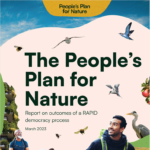
People’s Plan for Nature
Starting with a national conversation by an open call for ideas and stories from the public in 2022, followed by The People’s Assembly for Nature, formed by a representative group of 103 people with different backgrounds, values, and experiences, deliberating and collectively agreeing on how to tackle the UK’s nature crisis in four weeks’ discussion, The People’s Plan for Nature was created by the people and for the people.
Nature Neighbourhoods
Nature Neighbourhoods was launched in October 2023 in response to the calls for action by The People’s Plan for Nature, focusing on the local level and urban communities across the UK – who are ‘on the ground’ and ‘making change where they are’. This project supports the neighbourhoods to co-design and create people-powered plans and facilitates local organisations and wider communities to put these into practice.
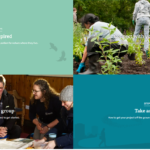
Wildlife Trusts – Community Hub
The Community Hub provides resources and inspiration for organising a community project to act for nature in our neighbourhoods and for anyone who wants to help nature on their doorstep, where they live and work.
‘Activists need to be in the room where the decisions are being made. We need the people in power to listen to us — the generation that will inherit their decisions.’
— Xiye Bastida, Co-Founder, Re-Earth Initiative